
THE 2026 Panczenko MFA Prize exhibition will be on view at Main Gallery, Second Floor, Memorial Union, 800 Langdon St., Madison, Wisconsin. Gallery hours: building open–10 p.m. daily
RECEPTION
April 10, 2026
Artist’s Talk // 5–6 p.m.
Reception // 6–7:30 p.m.
Chazen Museum of Art Names Anne E. Stoner as Winner of 2026 Panczenko MFA Prize
Opening April 10, ‘Infrastructure Bodies/Injury Systems: An Exhibition by Anne E. Stoner’ uses municipal surveillance video from the past year to explore the American governmental climate
MADISON, Wis. – The Chazen Museum of Art at the University of Wisconsin–Madison (UW–Madison) has announced artist Anne E. Stoner as the 2026 Russell and Paula Panczenko MFA Prize winner. The UW–Madison MFA candidate uses video and sound to illustrate the American governmental climate in “Infrastructure Bodies/Injury Systems: An Exhibition by Anne E. Stoner,” opening April 10 at the Main Gallery located on the second floor of the Memorial Union.
In the multi-channel installation, Stoner pairs surveillance video of political events that have occurred in Midwest cities such as Chicago and Minneapolis during the past year with data sonification from that footage. She uses the pixel movements of people in the video to create audio that illustrates the volume and intensity of motion. The exhibition also incorporates the voices of people who have been injured during protests in the United States. Stoner will use directional speakers to spatially isolate the sound in the exhibition, offering visitors various experiences as they explore each area of the gallery.
“I would describe the current governmental climate as calculated and frightening. It is no doubt we are living in unprecedented times. This project and my work in general aim to shed light on political practices that may seem acceptable or effective on the surface but in fact have dark and dangerous histories,” said Stoner.
“Infrastructure Bodies/Injury Systems” engages “Ending Crime and Disorder on America’s Streets,” an executive order signed in July 2025 that directs federal agencies to maintain urban safety through law enforcement, involuntary treatment for people living with mental illness and drug addiction and the removal of street encampments. Stoner says the executive order is reminiscent of the ugly laws enforced between 1867 and the early 20th century that criminalized the public presence of people with visible diseases and disabilities. The ordinances also targeted poor people and called upon law enforcement to fine, arrest or institutionalize people who were deemed unsightly. While enforcement waned by the mid-20th century, the ordinances remained in place until the mid-1970s.
Stoner hopes the exhibition will become a space where visitors can reflect on the American governmental climate of the past year and become familiar with the ugly laws and contemporary AI surveillance practices. “By peeling back the layers of the recent executive order, the exhibition reveals the unkind, systemic marginalization that is the foundation of these policies,” said Stoner.
The Russell and Paula Panczenko MFA Prize is offered annually by the Chazen Museum of Art in collaboration with the UW–Madison art department and provides a unique professional development opportunity for award winners. The selected artist is featured in a solo exhibition and gains experience throughout the entire process, from collaborating on layout and design to marketing and program development. The 2026 exhibition will be presented by the Wisconsin Union Directorate Art Committee. The winning artist is selected by an outside juror and receives an honorarium. This year’s juror was Tyler Blackwell, curator of contemporary art at the Speed Art Museum in Kentucky.
“Anne E. Stoner’s project connects past systems of exclusion to contemporary infrastructures of monitoring and control. Today’s AI-driven surveillance extends these histories, embedding old ideas about order and acceptability into new technologies that claim objectivity while producing harm,” said Blackwell. “Stoner’s work is ultimately generous and affirming. By transforming surveillance footage into sound and amplifying the voices of those injured or disabled through protest, she reclaims tools often used to erase accountability. Her work reminds us that even in a hyper-monitored world, connection is still possible, and that listening carefully to one another can open space for dignity, care and collective imagination.”
Stoner’s interest in disability studies and sociopolitical issues, as well as her previous work exploring the streetscape and accessibility, inspired “Infrastructure Bodies/Injury Systems.” She often considers the dangers posed in the street by cars, curbs, crosswalks and other elements that could cause critical injury, effectively deeming victims unfit for public spaces. Her work at UW–Madison focuses on social participatory art and data-centered artwork.
“The Russell and Paula Panczenko MFA Prize provides a valuable opportunity for the Chazen Museum of Art to partner with UW–Madison’s art department to offer students hands-on exhibition experience. We look forward to sharing Anne E. Stoner’s work with the broader campus community,” said Amy Gilman, director of the Chazen Museum of Art and senior director for the arts and media at UW–Madison.
Stoner appreciates the wealth of opportunity available to winners of the Russell and Paula Panczenko MFA Prize, including the experience of working with the team at the Chazen as well as the Wisconsin Union Directorate Art Committee, a student-led organization committed to presenting innovative exhibitions and related programming, and Memorial Union Main Gallery where her exhibition will be presented. She has also enjoyed the challenge of creating an exhibition for large, diverse audiences.
“Receiving the Russell and Paula Panczenko MFA Prize and working with an institution of this scale has been a transformative milestone. Beyond the recognition, opportunities like this are vital because they protect the non-commercial heart of the arts. Not every creative pursuit is inherently financially viable. This platform allowed me the freedom to spend months on a complex sound installation and allowed me to experiment, focusing on the pursuit of the work itself,” said Stoner. “The arts remain one of the few spaces where free speech and expression aren’t entirely bound by historical precedent. This freedom allows us to respond to the socio-political climate in real-time.”
The Russell and Paula Panczenko MFA Prize is supported by funds from the Russell and Paula Panczenko Fund for Excellence in the Visual Arts.
About the Artist
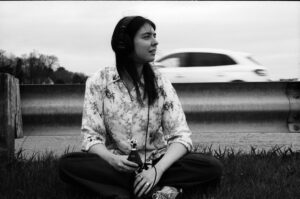
Anne E. Stoner, photo Mark Kosobucki
Anne E. Stoner is a sound artist and sonic researcher whose work criticizes political systems of disability, injury, pollution and death, questioning the role of the human body as a member of a national and global infrastructure in the 21st century. Her work brings about and coalesces studies in bodily complexities, human geography, psychogeographies and contemporary methodologies in ethnographic archiving and queer anthropology to create a practice with an empathetic methodology that challenges visual standards within contemporary artmaking and scholarship. Her work has been shown nationally and internationally, with her first solo exhibition displayed at the Francis Young Tang Teaching Museum and Art Gallery (Saratoga Springs, New York) in 2025. Stoner’s sound and writing can be read and listened to in Resonance: The Journal of Sound and Culture, Global Performance Studies Journal and The 2025 Struer Tracks Sound Biennial Almanac.
Stoner holds an undergraduate Master of Arts in Music from Edinburgh College of Art at the University of Edinburgh and a Master of Arts in sound from Northwestern University. In 2023, she began working toward an MFA in 4D studio art, focusing on sound and time-based media at the University of Wisconsin–Madison.
About the Wisconsin Union Directorate Art Committee
The Wisconsin Union Directorate Art Committee is dedicated to bringing novel and challenging exhibitions to the Wisconsin Union and advancing visual arts in the Madison community. This student-run committee manages every aspect of exhibitions, from artist selection and installation to art education and marketing. The Wisconsin Union Directorate Art Committee is responsible for programming exhibitions in the Wisconsin Union gallery spaces and strives to recontextualize standard approaches to the visual arts through collaborative and innovative exhibitions. For more information: union.wisc.edu/art
Images: “Infrastructure Bodies/Injury Systems: An Exhibition by Anne E. Stoner” (detail), the 2026 Russell and Paula Panczenko MFA Prize winner.
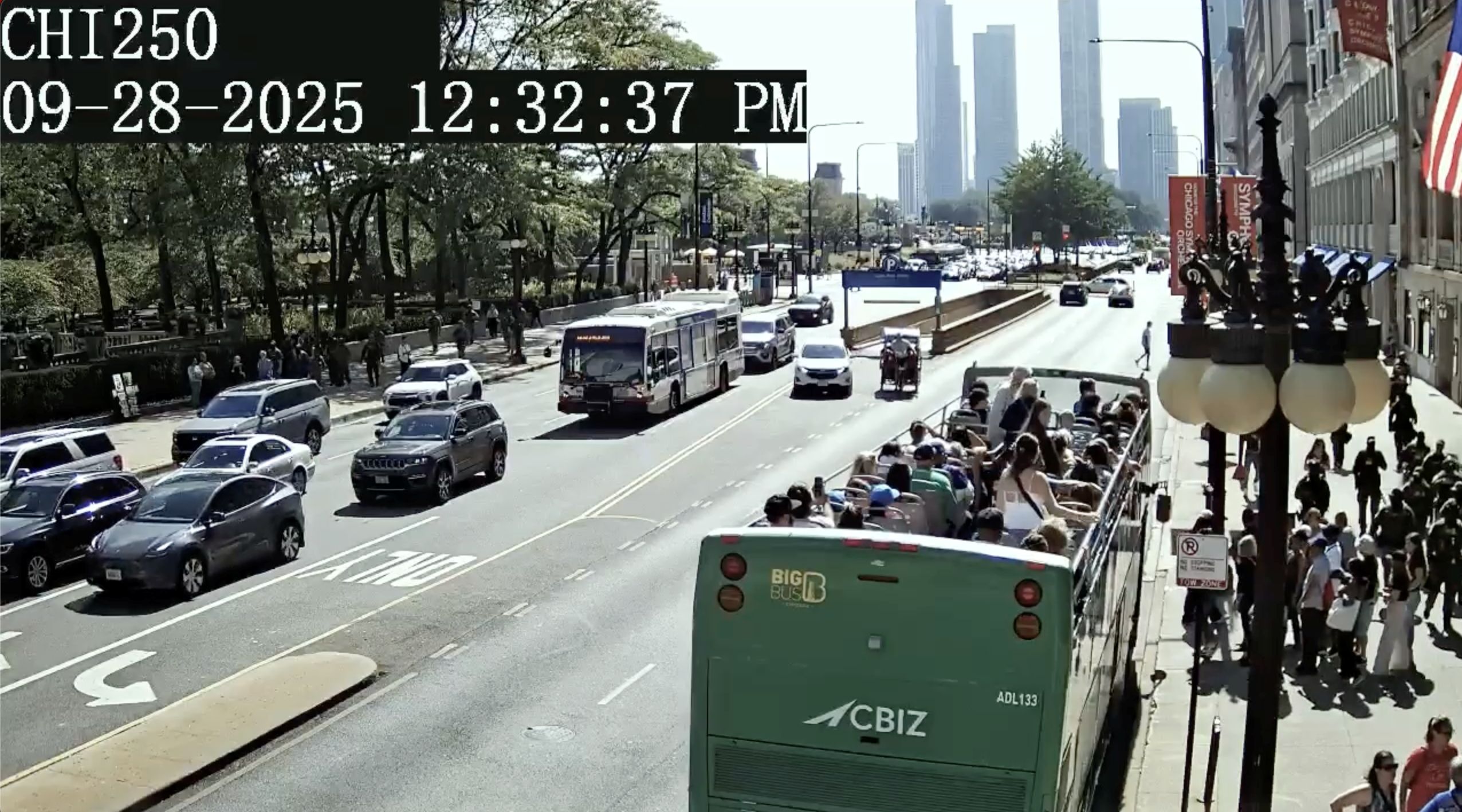
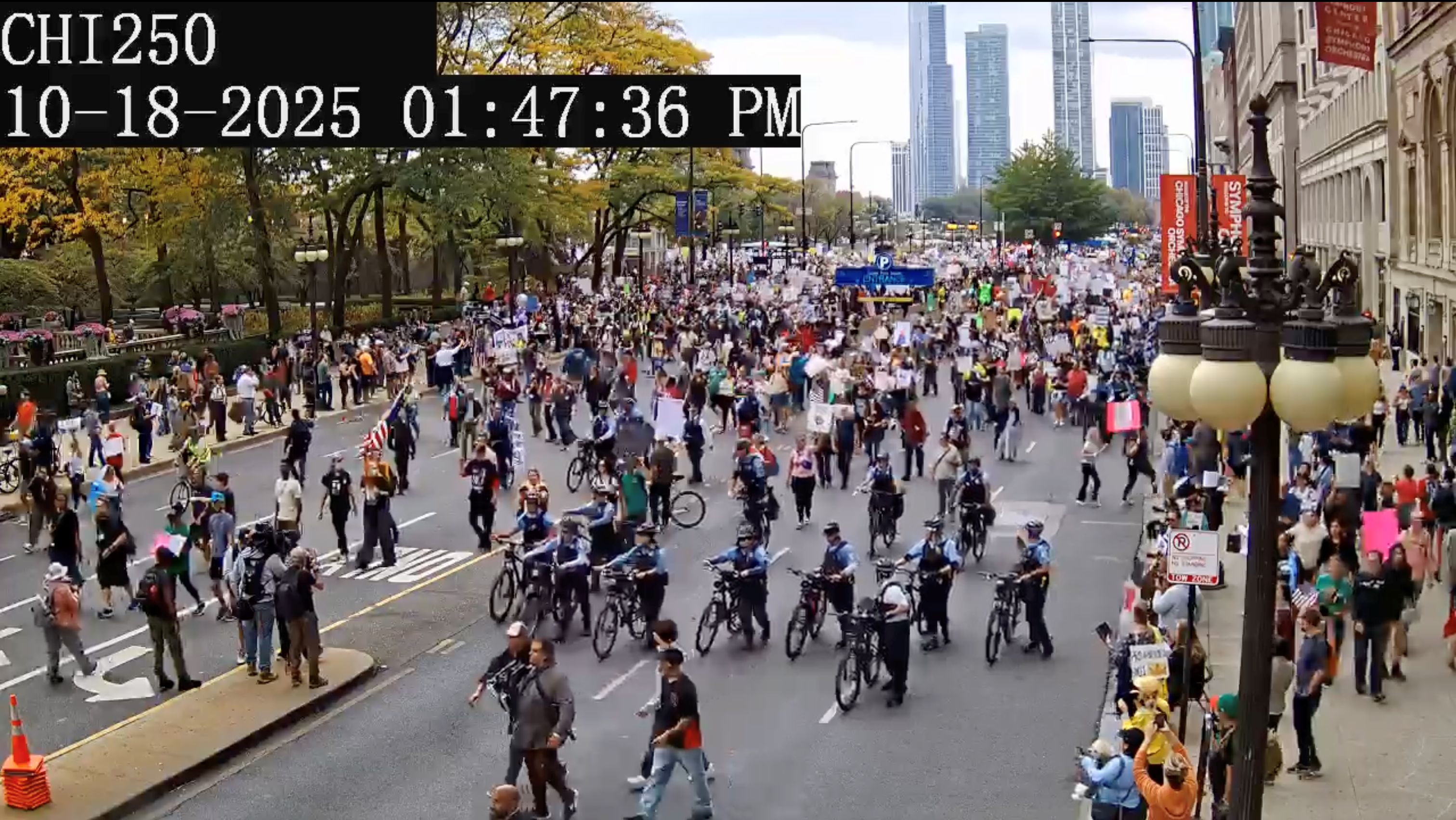
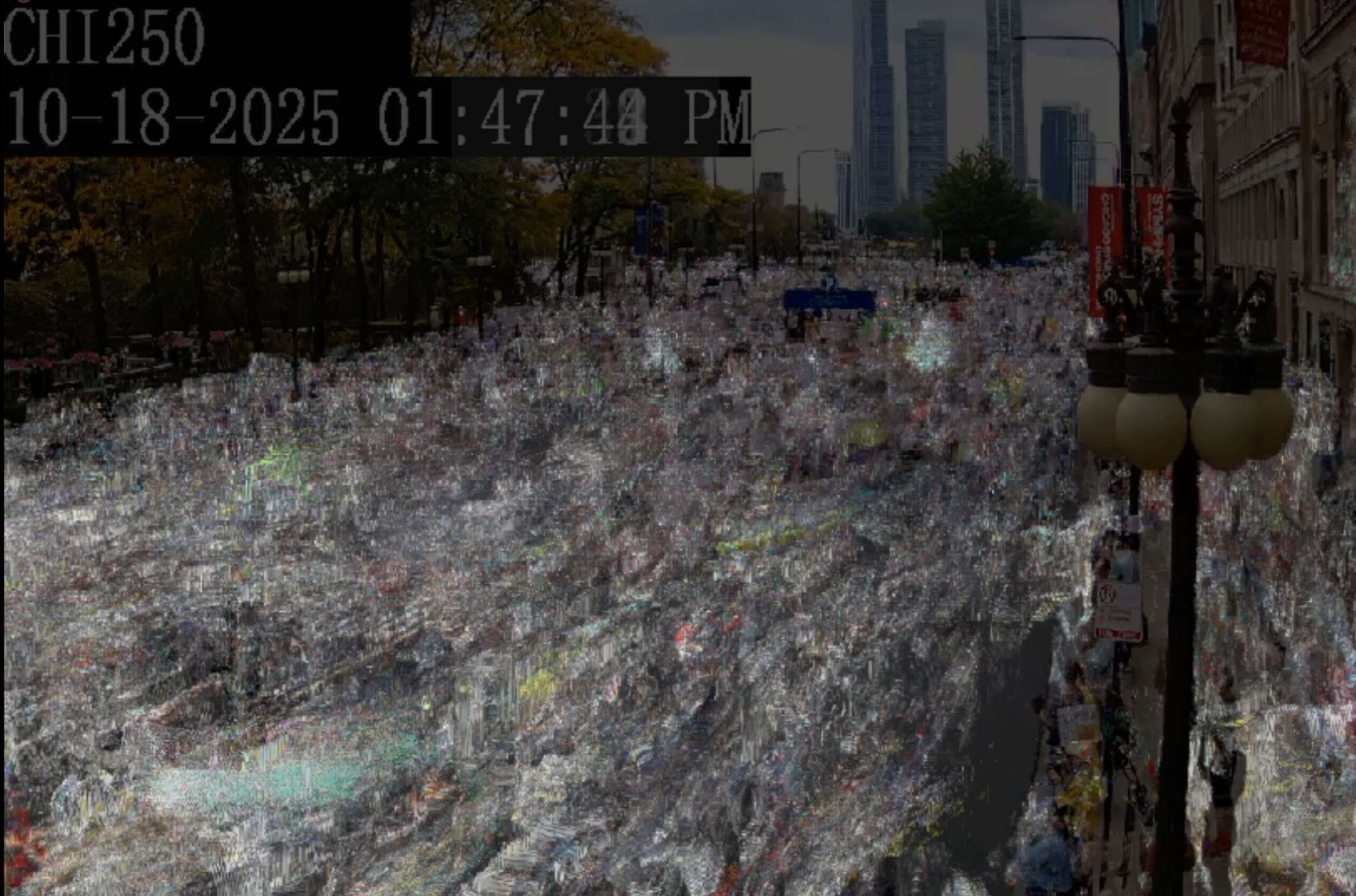
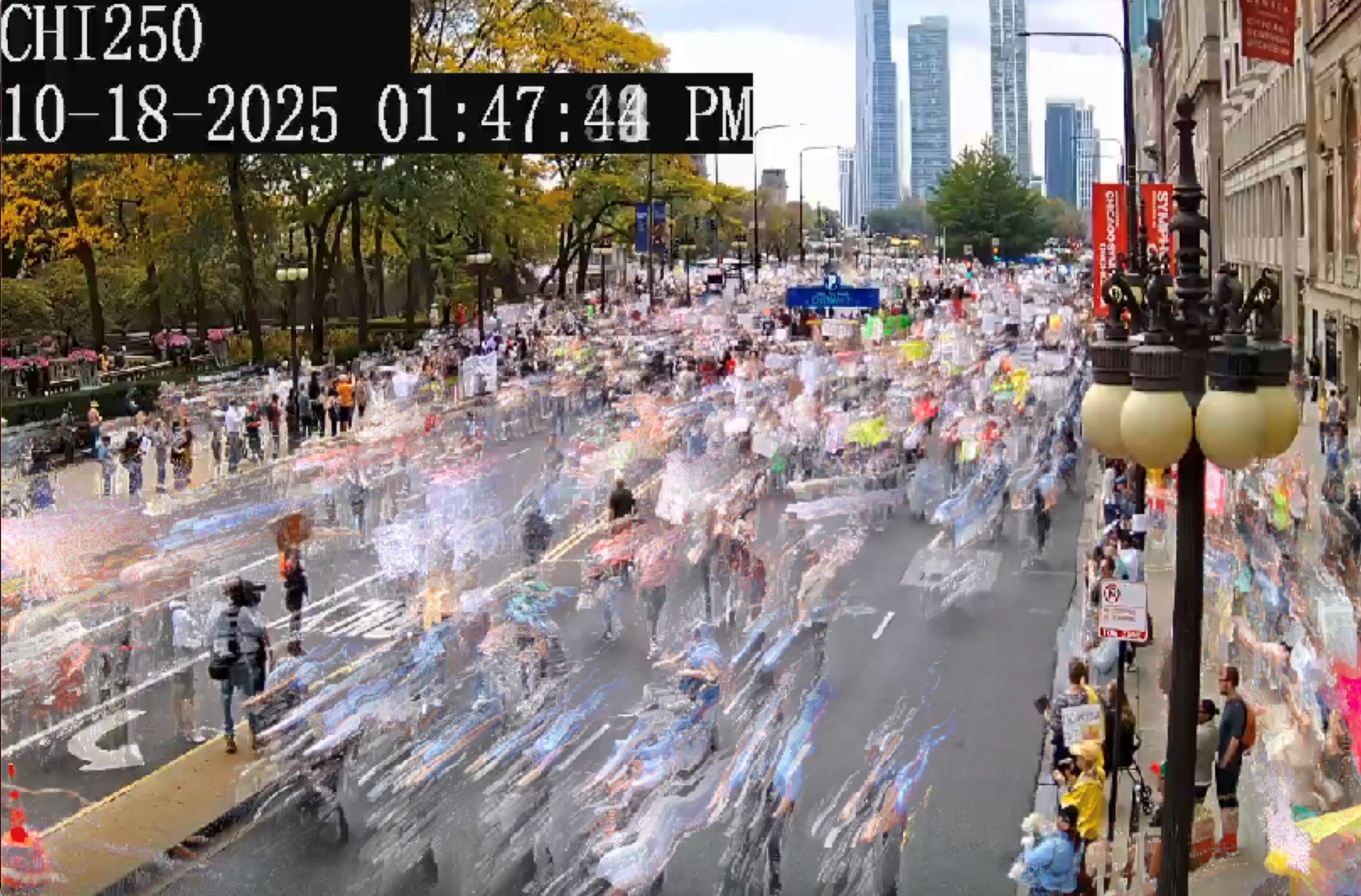
Infrastructure Bodies/Injury Systems: An Exhibition by Anne E. Stoner
The 2026 Russell and Paula Panczenko MFA Prize exhibition is presented by the Wisconsin Union Directorate Art Committee with the support of the Chazen Museum of Art.
Artist Anne E. Stoner’s statement
“To be a pedestrian is to be under suspicion.” —Rebecca Solnit
Infrastructure Bodies/Injury Systems is a counter-surveillance that explores the contemporary state of the American street as cyclically disabling and criminalizing. Who is welcome in the street, and how must they move and present to be accepted as “orderly”? How are disablement, injury, and death intertwined with political resistance?
This project presents an assemblage of municipal surveillance videos, which I obtained through the Freedom of Information Act from cities in the Midwest. These videos capture an array of street moments from the last twelve months that document the American governmental climate. From these videos, I have developed a pixel-responsive sonic programming system, turning digital human movement into sound, coupled with voices from those injured in protests in the United States.
Infrastructure Bodies/Injury Systems responds to the American sociopolitical state, particularly the 2025 executive order, “Ending Crime and Disorder on America’s Streets.” The exhibition claims this order as a twenty-first century Ugly Law, a series of ordinances that criminalized unsightliness, loitering, and vagrancy in nineteenth-century American cities, particularly Chicago. The project criticizes new AI-powered surveillance systems—which listen for “dangerous” noises, visually track for disorder, and sort for bodily traits (skin color, gait, height)—as furthering the power of this contemporary Ugly Law.
How does a politicized human body sound within a governmental system, and how must we pay attention in order to hear it?
Juror Tyler Blackwell’s statement
Across her practice, Anne E. Stoner works with sound, surveillance, and collective voice to ask urgent questions about who is allowed to appear in public space—and under what conditions. Her work does not speculate about the future. It begins with what is already here: existing footage, existing technologies, existing lives shaped by systems that quietly watch, sort, and judge. Stoner’s commitment is to telling real stories, not inventing them, and to using the image of now as a way to bear witness.
At the heart of her practice is a belief in the power of sound. Where contemporary surveillance collapses bodies into patterns and probabilities, sound restores texture and humanity. Breath, vibration, rhythm, and hesitation carry emotional and political weight. They remind us that bodies are not abstractions, and that listening—truly listening—can be a form of care, resistance, and solidarity. In Stoner’s work, sound refuses efficiency. It lingers. It accumulates. It asks viewers to slow down and stay present.
Stoner’s projects are deeply informed by disability history and scholarship, particularly the long policing of bodies deemed disruptive or out of place in public. Drawing from Susan M. Schweik’s 2009 The Ugly Laws: Disability in Public, her work connects past systems of exclusion to contemporary infrastructures of monitoring and control. Today’s AI-driven surveillance extends these histories, embedding old ideas about order and acceptability into new technologies that claim objectivity while producing harm.
Yet Stoner’s work is ultimately generous and affirming. By transforming surveillance footage into sound and amplifying the voices of those injured or disabled through protest, she reclaims tools often used to erase accountability. Layered voices form a collective presence—one that resists isolation and insists on shared experience. Her work reminds us that even in a hyper-monitored world, connection is still possible, and that listening carefully to one another can open space for dignity, care, and collective imagination.
About the juror:

Tyler Blackwell
Tyler Blackwell (he/him) is a curator, arts administrator, and museum leader from Fort Worth, Texas. He is currently the Curator of Contemporary Art at the Speed Art Museum. Specializing in queer and historically underrepresented artist practices, post-1960s abstract painting and sculpture, and postcolonial strategies in video and photography, he has worked in university, civic, and encyclopedic art museums and kunsthalles.
From 2018 to 2022, he was the Cynthia Woods Mitchell Associate Curator at the Blaffer Art Museum, a leading contemporary art institute on the campus of the University of Houston. Blackwell previously held positions at the Smart Museum of Art at the University of Chicago and the Art Institute of Chicago’s Department of Modern and Contemporary Art, where he supported permanent collection acquisitions and the organization of wide-ranging exhibitions, commissions, programs, and performances. He was named a “2026 Curator to Watch” by the Observer.